

Cheb Runner «immigration has given rise to Morocco’s multifaceted rhythms»
"80K" is a tribute to the cultural heritage of the Souss Massa Darâa region: ancestral rhythms meet forward-lookin electronic language

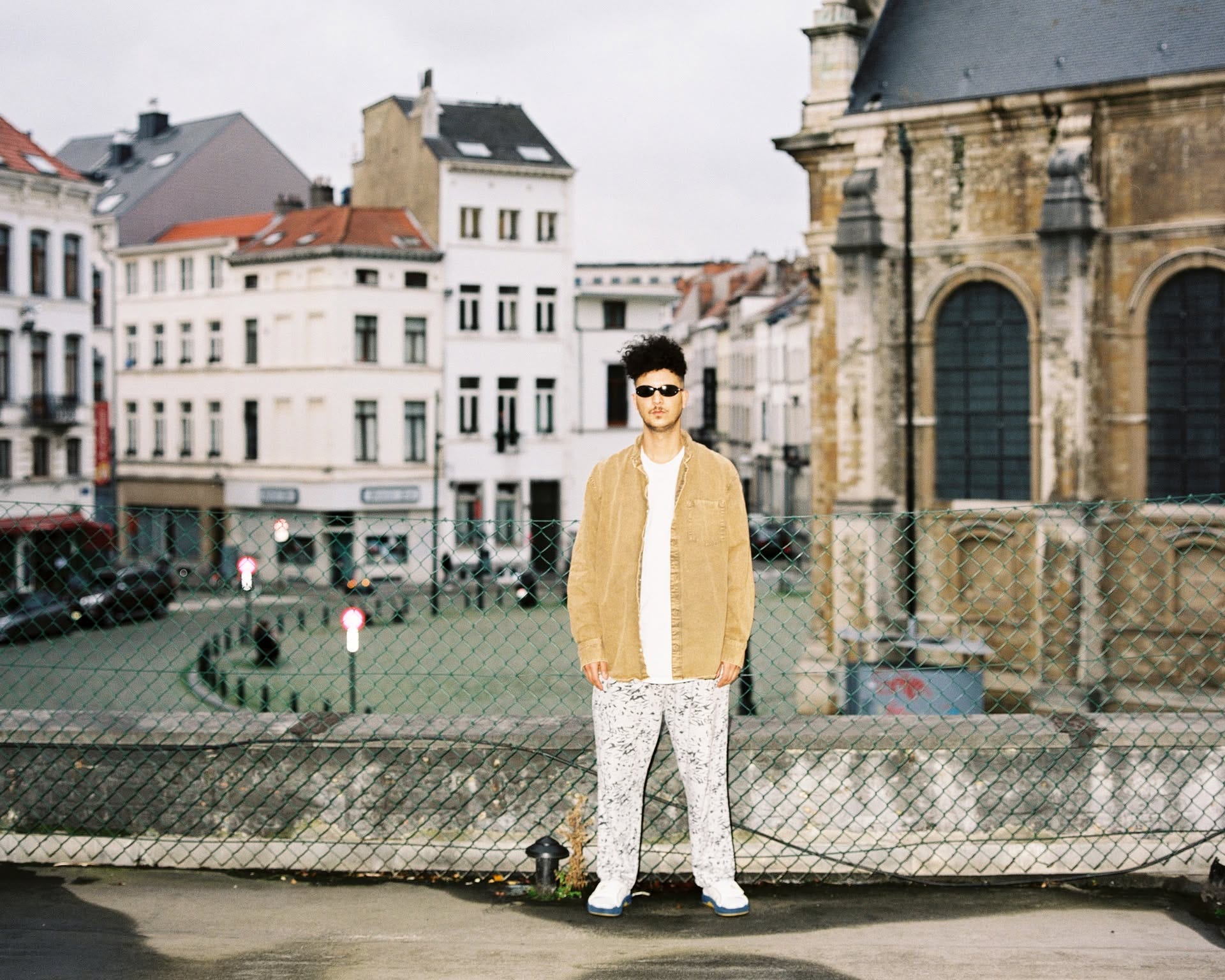
Cheb Runner, whose real name is Reda Senhaji, is a Moroccan producer and DJ from Agadir, now based in Belgium. His music explores the richness of traditional Moroccan music through a contemporary lens, blending it with electronic productions and a strong club-oriented approach.
On his latest album, “80K”, he takes this research to a new level, crafting irresistible tracks in which field recordings, production, instinct, and composition come together to create music that, at the same time, is rhythmically complex and accessible.
The album was recently released by Italian label Beat Machine Records as the second release in their “Terra Tempo” series, which aims to redefine the boundaries of global sound by blending the rich traditions of cultural music with the dynamic energy of modern club beats.
I asked Reda a few questions by email, discussing cultural heritage, clubs, Morocco, and his production techniques.
What are your earliest memories connected to music?
They come from a wide variety of places and times. The first and most obvious is my family, where we were constantly surrounded by sounds and music. And the most memorable, I think, are the moments spent with friends making traditional instruments using recycled objects from household waste or building sites.
When did you start playing and producing?
I started playing music as a child, mostly on the streets of Ihchach in Agadir with friends, either using instruments or everyday objects, in the empty garages of certain houses (which had a reverberation which made the sound very interesting to us) or even on various car parts that had distinctive resonances. My production work came about after I discovered music softwares and wanted to translate the rhythms I had in mind using those tools. I devoted a great deal of attention to learning and developing the technical skills needed to adapt the software to my vision of blending electronic music with Moroccan rhythms.
When was the Cheb Runner project born?
I think it came about after a long period of reflection on my musical approach, including the sounds I use. I suppose Cheb Runner was born out of the need to explore different rhythmic and sonic horizons; it doesn’t fit easily into a single box, but into several different ones. The music, rhythms and sounds that surround us can take on different physical forms and defy any standard.
Can you tell me about the artists, albums, and sounds that have most influenced your approach to composition/production?
I’ve always been convinced that it all starts with discovering modern music and recognising the traditional rhythms it has drawn upon. There’s always one artist that comes to mind: the drummer and artist Karim Ziad. He has been influenced by a variety of sources, adapting North African rhythms as well as other drumming styles, not to mention all the artists who have helped to modernise Amazigh music through the use of machines, or even the great Mahmoud Guinia — who experimented extensively with other musicians — Amazigh music has found a new way of expressing its anti-slavery and anti-colonial.
How does your career as a producer influence your work as a DJ, and vice versa?
For me, DJing is a form of sharing, and production plays a major role in artistic expression. DJing also allows me to share things that I might not necessarily produce as a musician, as I have my own direction and feel that my approach to sharing is increasingly leaning towards modular hardware set-ups for creating and performing live.
How would you describe the Souss Massa Darâa region to someone who is not Moroccan? What are its distinctive characteristics?
As far as I’m concerned, the Souss-Massa-Daraa region has that mystical and mysterious side; it’s a gateway on the edge of the desert that takes you by surprise. It has its harsh and gentle sides, just as it can be both cold and hot. Geographically speaking it’s the region situated in the centre of Morocco, between the north and the south, and it opens out onto beautiful coastal beaches.
How do your tracks usually come about? From a rhythmic cell that you expand, from inspiration drawn from your surroundings, or from things you listen to and read that eventually take the form of music?
Generally, the tracks are the result of listening experiences in various contexts, such as recordings of street musicians — which I love to archive — or, more recently, a mountain of cassettes I’ve bought or vinyl records. Apart from that, there’s the sound processing of percussion using machines or software to add color. Ultimately, this leads to a collision with elements of electronic music, which brings that club vibe or perhaps something playful when played out on sound systems.
Can you take me inside the electronic and music scene in Morocco? Where do people play, what kind of music is played, how is it organized, who makes up the audience, whether there is a mainstream and an underground scene, and so on?
There are quite a few initiatives to bring electronic music to Morocco. Some venues allow DJs and musicians to share their vision, as well as alternative trends within the scene. For example, I’ve been invited by the producer Guedra Guedra to the events he organizes and curates at Kabana in Marrakech. There are also other venues that facilitate collaborations of this kind, if we compare to how things used to be. And we mustn’t forget certain festivals, both past and present. I suppose this is a process of development and experimentation that is gradually taking place in the Moroccan music scene.
What do you think is the biggest misconception about Moroccan music among people who don’t know the scene, the cities, the musicians, and the clubs in Morocco?
It is important to know that Morocco is home to a multitude of tribes; it was the final stop for caravans traveling from the African continent and from Asia. Consequently, one must consider the immigration of a wide variety of cultures and the interplay between them: this is what has given rise to Morocco’s multifaceted rhythms. Each region, town or village relies on its own resources and methods to find its own rhythms and narratives for every situation or context.
Can you tell me about the Foundation (A)WAKE?
(A)wake was founded in response to the need for representation of the North African and Arab community in Rotterdam. Every two years, we organize a festival called New Radicalism, alternating in the following year with Heritage Studios, a learning and exchange program. Through these initiatives, we seek to research and experiment from our experiences as members of the diaspora and as immigrants. Our aim is to uncover hidden connections and critically reflect on our artistic and philosophical choices within the context of Western societies.
When and how did your connection with Beat Machine Records come about?
This collaboration began when Guedra Guedra introduced us, following Beat Machine Records’ interest in discovering Moroccan and Mediterranean composers, producers, and musicians. After a series of meetings, we worked on developing a concept for both the creative process and the artistic direction. This also motivated me to push the project further and develop a stronger conceptual framework that could meet its artistic ambitions and expectations.
Is 80k a destination or a starting point for you? What are your next plans?
80K is one of the central projects—and a guiding concept—that has shaped my musical and artistic journey since I began making music. I see it as part of a long-term vision: to continue exploring the possibilities of 6/8 rhythmic structures and to further integrate this rhythmic language into electronic and club music, creating compositions that come to life through powerful sound systems. Looking ahead, I am developing a number of new projects, both collaborative and solo, that will expand this exploration into new creative territories. These future works will not only deepen my musical practice but also engage with other artistic disciplines and forms of expression.